Fruit shape
As fruit matures, the shoulders fill out and rise level with or above the point where the stalk joins. The beak (the small point near the tip) becomes less prominent on many cultivars.
Harvest and post-harvest
Mangoes ripen after picking, but they only develop full flavour if picked mature. The harvest decision is therefore about maturity, not ripeness, and it is easy to get wrong when skin colour, the most obvious signal, is also the least reliable one.
Skin colour varies with cultivar and with sun exposure: Keitt can be fully mature while still green, and a blushed Tommy Atkins may be immature on the sunny side. Rely instead on several indicators together.
As fruit matures, the shoulders fill out and rise level with or above the point where the stalk joins. The beak (the small point near the tip) becomes less prominent on many cultivars.
Cut a sample fruit. Flesh near the seed changes from white to cream and then yellow as maturity advances; this inner change starts before any outward sign.
Most cultivars mature roughly 100–150 days after flowering, but heat speeds development and cool weather slows it. Record your own flowering dates to build a local reference.
Dry matter, mostly starch that later converts to sugar, predicts eating quality well. Australian industry guidance sets minimum dry-matter targets for main cultivars, measured with handheld near-infrared meters or by oven-drying samples.
Run through these checks on a sample of five to ten fruit from different parts of the canopy before harvesting a whole tree.
0 of 6 checks complete.
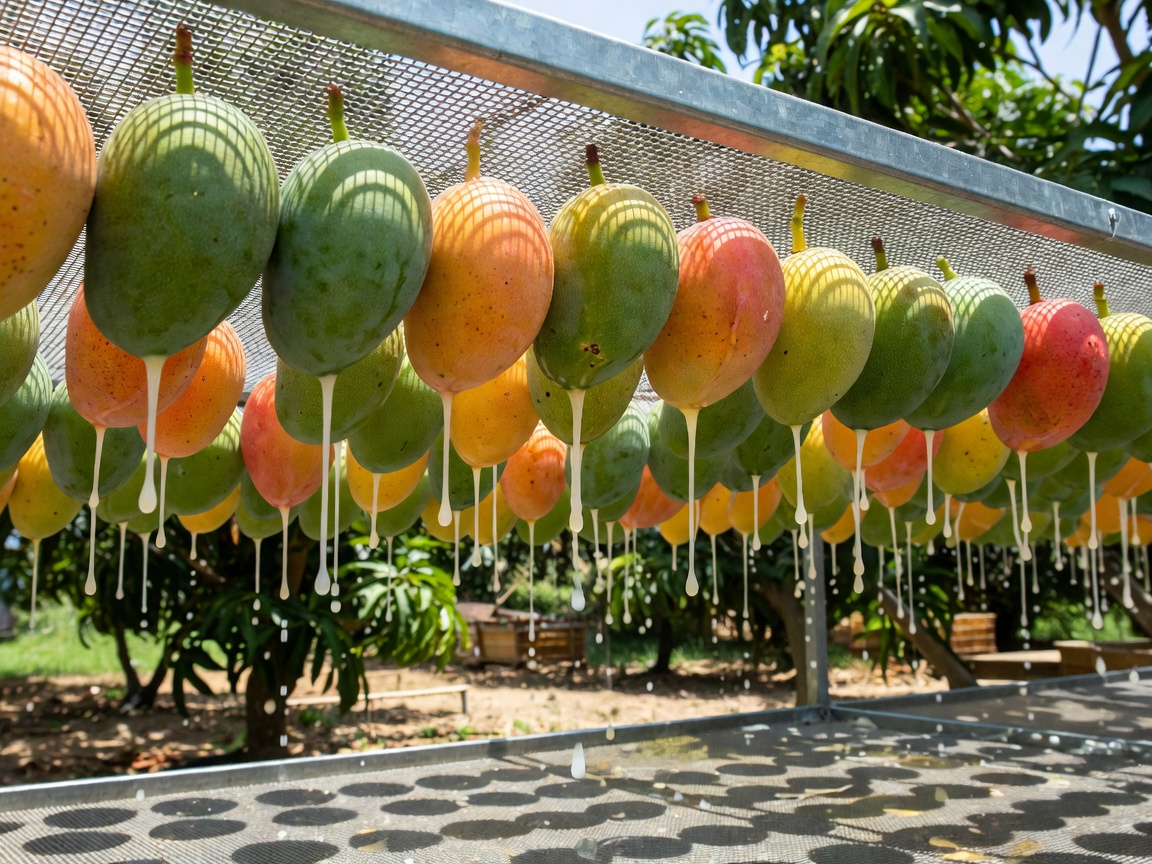
Mango sap is acidic and caustic. When it runs onto the skin it leaves dark, unsightly burn marks, and it can irritate human skin too, since mangoes belong to the same family as poison ivy. Wear gloves and long sleeves.
The common technique is to harvest with a few centimetres of stalk attached, which stops sap flowing. Later, at a draining station, snap or cut the stalk off and immediately place the fruit stem-end down on a rack or tray for 20 minutes or more. Commercial packhouses often add a mild detergent dip to wash residual sap away.
Ripen mature fruit at moderate room temperature, roughly 18–22 °C, out of direct sun. Ripening typically takes four to ten days depending on cultivar and maturity at harvest. Fruit is ready to eat when it gives slightly to gentle pressure and smells fragrant at the stem end.
Do not refrigerate mature-green fruit: temperatures below about 10–13 °C can cause chilling injury, showing as grey, pitted skin and poor flavour. Once fully ripe, fruit can be chilled for a few days to slow further softening.
For export, many destinations require quarantine treatment against fruit flies. Hot water treatment, immersing fruit in water held at about 46 °C for an extended period that depends on fruit size and shape, is one protocol recognised by the US Department of Agriculture’s APHIS. Home growers do not need it, but it explains why imported mangoes sometimes taste less vibrant than tree-ripened fruit at home.
Questions about your own picking window? Browse the orchard uncertainties or send an orchard query.
We use cookies Essential cookies keep this site working. Optional ones help us see what is useful. You can change your choice at any time. Cookie policy