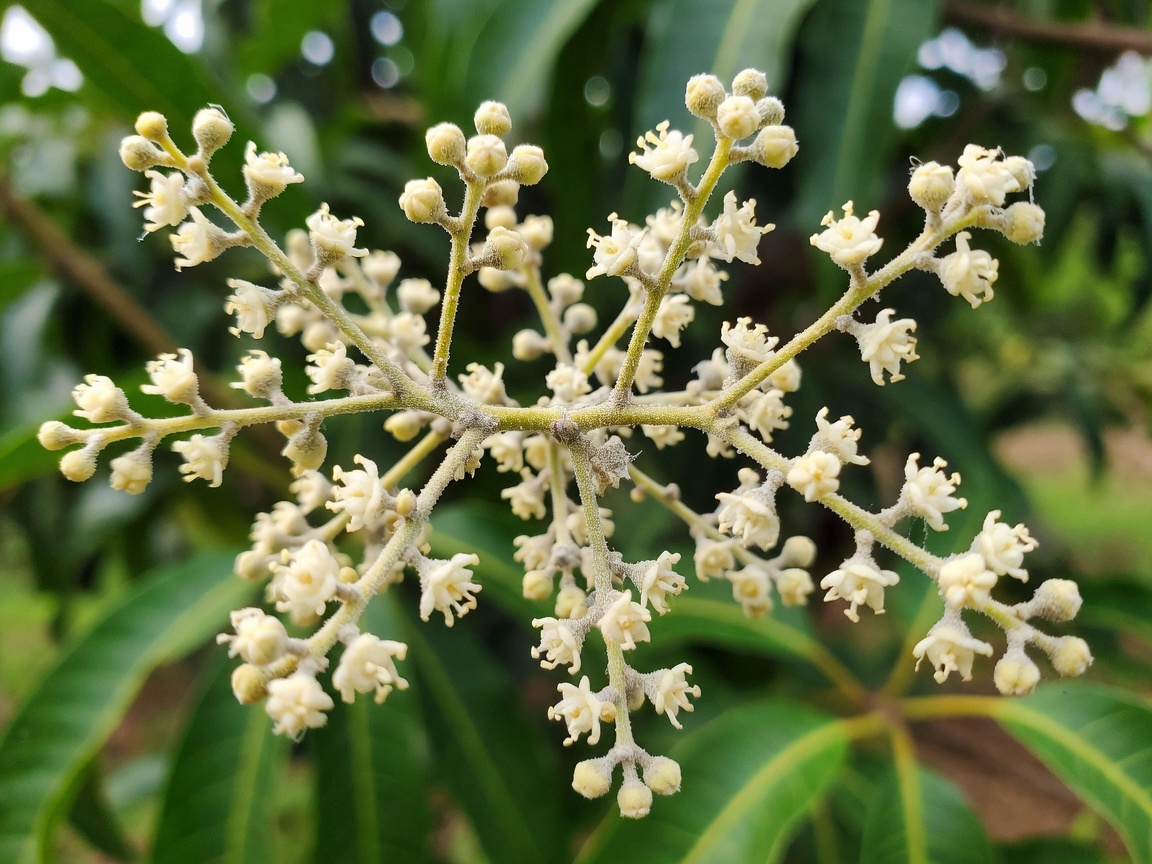
Scout weekly at bloom
Flowering is the most vulnerable period. Walk the orchard weekly, checking several panicles per tree on different sides.
Pruning and disease prevention
Pruning and disease control are the same job seen from two angles. A compact, open canopy dries quickly after rain, lets sprays reach their target and lets you see trouble early. A tall, dense one hides problems until they are expensive.
Training starts when a young grafted tree reaches roughly 60–100 cm. Head it back to encourage three or four well-spaced scaffold branches, then tip those again after each flush hardens. Mango shoots grow in flushes and branch at the terminal bud, so each tipping multiplies the number of shoot ends, and therefore the potential flowering points.
The goal is a low, spreading framework with an open centre. Remove flowers on very young trees for the first year or two so energy goes into structure rather than an early crop that bends branches.
Once trees are fruiting, prune annually soon after harvest. Typical cuts include lowering the overall height to a working level (often 2.5–4 m for small orchards), removing a large upright limb or two from the centre to open a “light window”, cutting out dead and diseased wood, and lifting skirts so fruit does not touch the ground.
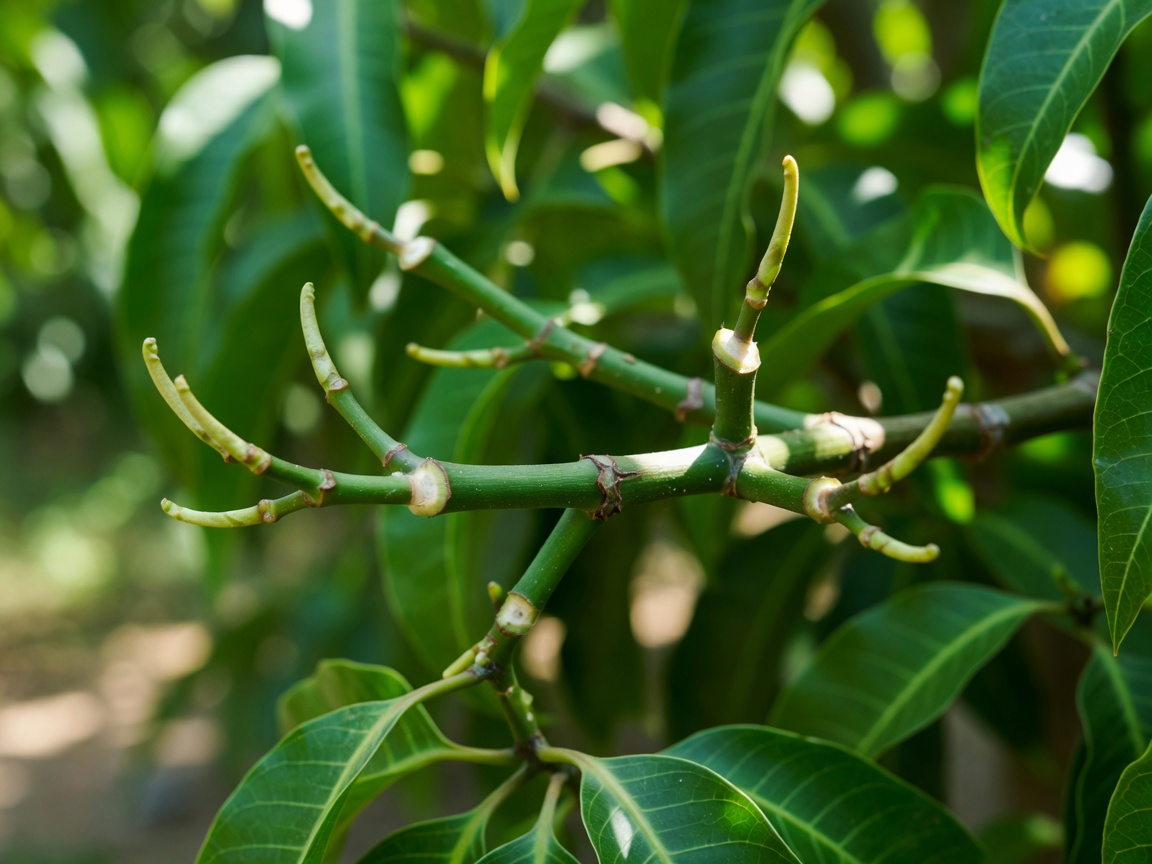
Mangoes flower mainly on terminal shoots that have matured and rested for some months. Prune too late, and the regrowth is still too young when the flowering trigger arrives, costing you a crop. Prune promptly after harvest, and one or two flushes have time to harden first.
Heavy renovation of an overgrown tree, cutting it back to a few main limbs, is possible because mangoes regrow vigorously, but expect to lose one to two crops. Spreading renovation over two or three seasons reduces the shock.
Learn the earliest visible sign of each common problem. Product choice and permitted chemicals differ by country, so confirm with your local authority before spraying.
| Problem | Cause | Early symptom | Prevention |
|---|---|---|---|
| Anthracnose | Colletotrichum fungi | Black spots on panicles and young leaves; sunken black lesions on ripening fruit | Tolerant cultivars, open canopy, protectant sprays from bloom to fruit set in wet weather |
| Powdery mildew | Fungus (Erysiphe/Oidium) | White powder on flower stalks; flowers drop | Monitor at panicle emergence; sulphur where permitted |
| Malformation | Fusarium mangiferae | Compact, thickened “bunchy top” panicles or shoots | Clean budwood; prune out and destroy affected parts well below symptoms |
| Bacterial black spot | Xanthomonas bacteria | Angular, raised black leaf spots; star-shaped cracks on fruit | Windbreaks, copper-based protection where permitted, avoid wounding |
| Stem-end rot | Lasiodiplodia and others | Dark rot spreading from the stalk after harvest | Prune dead wood, careful harvest, hygienic handling |
| Fruit flies | Bactrocera species | Tiny sting marks; soft, rotting flesh with larvae | Monitoring traps, bait sprays, fruit bagging, prompt collection of fallen fruit |
Flowering is the most vulnerable period. Walk the orchard weekly, checking several panicles per tree on different sides.
Remove dead twigs, mummified fruit and fallen fruit. Most fungal inoculum survives on old, dead tissue inside the canopy.
In dry bloom seasons, many growers need little or no fungicide. In wet ones, protectant sprays at the right stage matter far more than frequency.
Note bloom dates, rainfall and disease appearance each year. Within a few seasons you can predict high-risk years and act ahead of them.
A healthy canopy delivers fruit worth harvesting carefully. Continue to planning the picking window.
We use cookies Essential cookies keep this site working. Optional ones help us see what is useful. You can change your choice at any time. Cookie policy